DAM managers are custodians of context – not just metadata

Choosing digital asset management software is no longer just about storing files. For many organisations, it's about reducing compliance risk, protecting brand reputation, improving marketing efficiency and giving employees confidence that every asset they use is approved.
Whether you're replacing shared drives, moving on from an overly complex enterprise DAM, like Telenor, or purchasing your first platform, the challenge isn't finding software with plenty of features. It's identifying which platform best supports the way your organisation actually works.
This guide explains how to evaluate DAM platforms for brand governance, compliance, AI, permissions and content library management, helping marketing, IT and compliance teams choose a solution that supports long-term growth and reduces operational risk.
What is digital asset management software?
Digital asset management software (DAM) provides a central location for storing, organising, searching and distributing digital assets such as:
- Images
- Videos
- Design files
- Brand guidelines
- Marketing collateral
- Documents
- Audio
- Presentations
Modern, enterprise DAM platforms also provide governance capabilities that help organisations:
- Control who can access assets
- Prevent expired or unlicensed content being used
- Manage consent and usage rights
- Maintain brand consistency
- Improve content library management
- Integrate with marketing technology
- Detect duplications
For many organisations, DAM has evolved from a storage solution into an essential governance platform.
How to evaluate digital asset management software
Many buying guides focus on feature lists. A better approach is to evaluate software against the risks and inefficiencies you're trying to eliminate.
Questions to ask when deciding on your DAM:
- Can we trust people to download the correct version?
- Can we prove assets are licensed for use?
- Can we control who sees sensitive content?
- Will people actually enjoy using it?
- How much administration will it require?
- Will it scale as our organisation grows?
These questions reveal much more than comparing feature matrices.
The 10 evaluation criteria
1. Search and discoverability
The best content library in the world is useless if nobody can find anything.
Look for:
- AI-assisted search
- Manual metadata support
- Controlled vocabularies
- Saved searches
- Similar image search
- Search inside documents
- Fast performance
Remember that AI-generated tags rarely capture organisation-specific knowledge.
For example, a healthcare charity may need assets tagged with disease names, fundraising campaigns and regional programmes that AI cannot reliably infer. A university may require assets classified by faculty, campus, academic year and consent status.
Good metadata strategy remains essential.
2. AI and automation
AI has become one of the biggest talking points in digital asset management software, but buyers should look beyond marketing claims and focus on practical business value.
The most useful AI features help teams work faster by reducing manual administration and improving search, without compromising governance.
Look for capabilities such as:
- AI-generated keywords and descriptions
- Natural language search
- Visual similarity search
- Search within documents
- Duplicate detection
- Automatic transcription for video and audio
- Metadata suggestions during upload
These features can dramatically improve the efficiency of content library management, particularly for organisations managing hundreds of thousands of assets.
However, AI should complement a well-designed metadata strategy rather than replace it.
Organisation-specific information – such as campaign names, product ranges, approval status, usage rights and regional restrictions – still requires human oversight. AI can identify what's visible in an image, but it cannot determine whether an asset has been approved for a particular campaign or whether its licence has expired.
The best DAM platforms combine AI with strong governance controls, ensuring assets are both easy to find and safe to use.
3. Facial recognition: ask the right questions
Many DAM vendors include facial recognition as an AI feature, but buyers should understand the legal and operational implications before treating it as a requirement.
Unlike AI image tagging, under UK GDPR and the EU GDPR, facial recognition involves processing biometric data, which can fall under special category personal data and carries significant legal and ethical obligations. Organisations need a clear lawful basis and, in many situations, explicit consent before using facial recognition technology.
When evaluating vendors, ask:
- Does facial recognition process biometric data or simply detect that a face exists?
- What legal guidance has the vendor followed?
- Who is responsible for ensuring lawful use?
- Can the feature be disabled entirely?
- How are consent and biometric processing managed?
For many organisations, particularly those in regulated industries, higher education, charities and organisations working with children or vulnerable people, the risks may outweigh the benefits.
Some vendors provide facial recognition while placing responsibility for compliance entirely on the customer through their terms and conditions. Others have deliberately chosen not to offer it because they believe the legal and operational risks currently outweigh the benefits.
Asset Bank takes the latter approach, choosing not to release facial recognition as part of the product because its focus is helping customers reduce compliance risk rather than introducing high-risk biometric processing into everyday marketing workflows.
Instead, it invests in AI capabilities that improve search, tagging and productivity without requiring organisations to navigate the complexities of biometric data processing.
4. Brand governance
One of the biggest reasons organisations invest in DAM is improving brand governance.
Ask vendors how they prevent:
- Outdated logos
- Old campaign assets
- Unapproved imagery
- Incorrect templates
- Multiple versions of the same asset
Useful capabilities include:
- Version control
- Approval workflows
- Archive rules
- Expiry dates
- Read-only master assets
- Download restrictions
- Brand portals
Brand governance should happen automatically – not rely on users remembering which version is current.
5. Compliance and rights management
This is increasingly one of the biggest differentiators between DAM platforms.
Consider:
- Image licence expiry
- Model releases
- Consent management
- Photographer credits
- Territory restrictions
- Usage restrictions
- Editorial-only assets
- Time-limited campaigns
The strongest platforms actively prevent non-compliant assets from being downloaded instead of simply recording rights information.
Ask vendors:
- What happens when consent expires?
- Can downloads be blocked automatically?
- Can assets disappear from search?
- Are warnings shown before download?
- Can permissions change automatically?
These features significantly reduce compliance risk.
6. Permissions
Not everyone should see every asset. DAM software allows you to restrict who can see what.
For example, enterprise organisations often require different access for:
- Marketing
- HR
- Agencies
- Partners
- Regional teams
- Franchisees
- Retailers
- Press
- Executive leadership
The best enterprise DAM platforms make permissions easy to configure while remaining straightforward to administer.
Look for:
- Folder permissions
- Metadata permissions
- User groups
- Single Sign-On
- External users
- Download permissions
- Approval before download
Poor permission management often creates unnecessary administrative work.
7. Content library management
As libraries grow into hundreds of thousands of assets, organisation becomes critical.
Effective content library management includes:
- Folder structures
- Collections
- Metadata
- Bulk editing
- Duplicate detection
- Archive policies
- Lifecycle management
- Version history
Ask how the platform helps maintain a clean library over time – not just how assets are uploaded.
8. User experience
The most feature-rich DAM can still fail if employees avoid using it.
Evaluate:
- Navigation
- Search speed
- Mobile usability
- Download experience
- Upload workflow
- Learning curve
Many organisations replace enterprise platforms simply because they're too complicated.
Ease of use drives adoption.
Adoption drives ROI.
9. Integrations for creative teams
Modern marketing teams expect their assets to be available wherever they work – especially design teams.
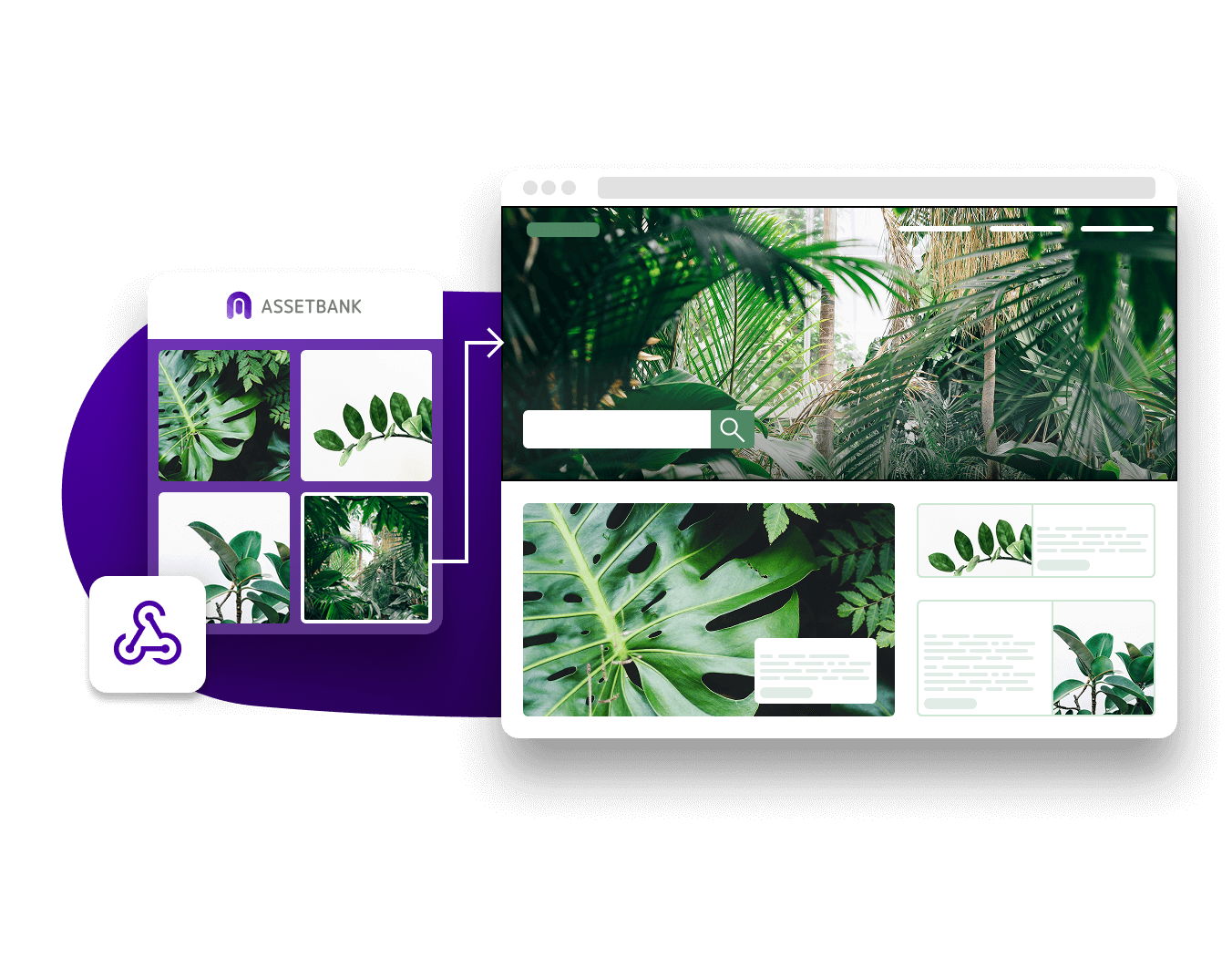
Your DAM should integrate with design software, so creatives no longer need to download files from a content library, upload elsewhere to edit, export to desktop, and then upload and replace the file in the DAM.
This long-winded process adds potential for duplicate assets and confusion.
Instead, teams access content directly from the DAM platform – and should be able to see all the necessary metadata they need at the same time, i.e., who to credit, when the asset expires, and any limitations on where it can/can’t be used.
Other typical integrations include:
- Microsoft 365
- Google Workspace
- Shared drives
- CMS platforms
- Templating software
- Marketing automation
- Project management software
Also ask about APIs and asset transformers.
10. Customer support after purchase
Support should be a key part of your evaluation. Even the most feature-rich digital asset management software will struggle to deliver value if users aren't confident using it or administrators don't have the help they need.
Ask vendors what support is included beyond the initial implementation. This might include:
- Onboarding
- Administrator training
- A dedicated customer success manager
- Technical support
- Regular product updates and access to documentation or knowledge bases.
It's also worth understanding how support is delivered.
- Can you speak to experienced product specialists when you need them?
- Are response times covered by service level agreements (SLAs)?
- Is support included in the subscription, or does it come at an additional cost?
Strong support doesn't just resolve technical issues – it helps drive user adoption, encourages best practice and ensures your DAM continues to evolve alongside your organisation's needs.
When evaluating vendors, check for feedback from existing customers about their support experience, as this can be one of the clearest indicators of a successful long-term partnership. Impartial platforms include Trustpilot, Capterra and G2.
Questions every DAM buyer should ask
Rather than asking whether a platform supports permissions or workflows, ask practical questions such as:
- How would we revoke an image after consent is withdrawn?
- How quickly could we replace every outdated logo?
- What happens if someone downloads an expired image?
- What are the legalities around facial recognition?
- Who is responsible for ensuring compliance with GDPR?
- How are external parties restricted from internal assets?
- How can I easily share assets externally?
- How long does onboarding normally take?
- What percentage of customers actively use the system?
- What level of customer support can I expect?
These questions reveal how mature the platform really is.
Industry considerations
Food & beverage brands
Food and beverage brands often manage thousands of assets across multiple products, brands, retailers, distributors and international markets. Marketing teams need to ensure partners always have access to the latest approved content while preventing outdated packaging, discontinued products or region-specific campaigns from being used incorrectly.
Look for:
- Permissions for brands, regions and distributors
- Version control for packaging and product imagery
- Usage rights for photography and licensed content
- Approval workflows for regulated marketing materials
- Brand portals for retailers and external agencies
- Fast search across large product libraries
A DAM helps food and beverage organisations maintain brand consistency, speed up campaign delivery and ensure every partner is using approved, up-to-date assets.
Higher education
Universities commonly need:
- Student release form consent management
- Department permissions
- Faculty branding
- Prospectus photography
- Large image libraries
- External photographer uploads
- Student campaigns
A DAM helps universities centralise marketing assets, manage student imagery, simplify content sharing across faculties, and maintain control over image rights, consent and brand standards.
Charities and NGOs
Non-profits frequently manage:
- Sensitive imagery
- Donor communications
- Volunteer content
- International campaigns
- Complex consent requirements
The ability to withdraw content quickly is often critical. DAM software helps charities and NGOs keep campaign assets organised, protect supporter and beneficiary imagery, and ensure every team is working from the latest approved content.
Franchises and distributed organisations
These organisations typically prioritise:
- Brand governance
- Local marketing
- Regional permissions
- Approved templates
- Controlled downloads
A DAM helps franchise organisations scale marketing without losing control, ensuring every location has secure access to approved, compliant assets.
Frequently asked questions
Which digital asset management software works best for mid-sized enterprises?
The best digital asset management software for mid-sized enterprises strikes a balance between capability and usability. Many organisations outgrow basic file-sharing platforms but find traditional enterprise DAM systems overly complex and expensive.
Look for a solution that offers strong permissions, metadata, AI-assisted search, integrations, rights management and brand governance without requiring extensive administration. Mid-sized businesses typically benefit most from platforms that are easy to deploy, intuitive for non-technical users and scalable as the organisation grows.
How do mid-sized companies simplify sharing content using digital asset management software?
Instead of emailing files or relying on shared drives, mid-sized organisations use DAM to create a single source of truth for approved assets.
Users can search, download or share content through secure links, branded portals or user-specific permissions. This reduces duplicate files, eliminates confusion over versions and gives everyone access to the latest approved content without marketing teams acting as gatekeepers.
What is the best digital asset management software for marketing teams?
Marketing teams benefit most from software that combines speed with governance.
Look for:
- Fast search
- AI-assisted tagging
- Version control
- Approval workflows
- Creative integrations
- Campaign collections
- Brand portals
- Usage rights management
The ideal platform should help marketers work faster while ensuring only approved assets are distributed internally and externally.
What is the best digital asset management software for content libraries?
For organisations managing large content libraries, the best DAM prioritises discoverability and long-term organisation.
Key capabilities include structured metadata, controlled vocabularies, duplicate detection, bulk editing, lifecycle management and powerful search. AI can improve efficiency, but a well-designed metadata strategy remains essential for maintaining an organised and searchable library over time.
What digital asset management software suits charities and non-profits?
Charities and non-profits often need DAM software that supports both collaboration and compliance.
Features such as consent management, usage rights, photographer credits, permissions and secure sharing help organisations protect sensitive imagery while making approved assets easy for fundraising, communications and regional teams to access. Ease of use is especially important where volunteers or distributed teams are involved.
What's the best DAM software for NGOs with compliance needs?
NGOs handling sensitive photography, vulnerable communities or international programmes should prioritise compliance over storage capacity alone.
Look for DAM software that can manage consent, control access, enforce usage restrictions, maintain audit trails and remove or restrict assets automatically when permissions change. These governance capabilities help reduce legal and reputational risk while ensuring teams can confidently use approved content.
Final thoughts
The best digital asset management software isn't necessarily the platform with the longest feature list. It's the one that helps your organisation govern content with confidence.
As digital content volumes grow and compliance expectations increase, successful organisations are looking beyond storage and search. They're investing in enterprise DAM platforms that strengthen brand governance, improve marketing asset organisation, simplify content library management and reduce operational risk.
By focusing your evaluation on governance, usability and long-term scalability rather than feature count alone, you'll be far more likely to choose a platform that delivers lasting value across marketing, compliance, IT and the wider organisation.
Want to chat to our friendly team to learn more? Book a call to discuss exactly what you need from DAM software, and we'll see if we can help.

Dont’ forget to share this post