

What is 'brand asset management'?

It's how you manage your brand's assets! Brand asset management (BAM) centralises, organises, and safeguards the digital assets that define your brand - logos, templates, imagery, and guidelines - ensuring consistency, efficiency, and compliance. 

Without BAM, teams can waste up to 30% of their time searching for or recreating files, leading to costly duplication and off-brand mistakes. 

Integrations

Brand asset management matters more than ever

state1
Over 30% of marketers spend three weeks a year just looking for files

As your brand grows, things can get messy fast.

Staying on top of the right versions, keeping content consistent, and making sure everyone has access? That quickly turns into a full-time juggling act. That’s where brand asset management steps in – your shortcut to a more organised, consistent brand.

We’ll show you how the best brand asset management solutions and digital asset management for brands can transform your workflows and increase the return on your creative investments.

You’ll learn:

  • What is brand asset management software?
  • BAM vs DAM
  • How BAM powers your brand
  • The benefits of brand asset management
  • Who uses brand asset management?
  • 5 Best practice tips for BAM
  • Frequently asked questions about BAM

Let’s begin by unpacking exactly what brand asset management software is – and why it's such a vital part of your brand’s success.

What is brand asset management software?

Brand asset management (BAM) is the process of storing, organising, and managing all the visual and written content that represents your brand. That includes everything from logos and campaign visuals to brand guidelines, product imagery, and messaging templates.

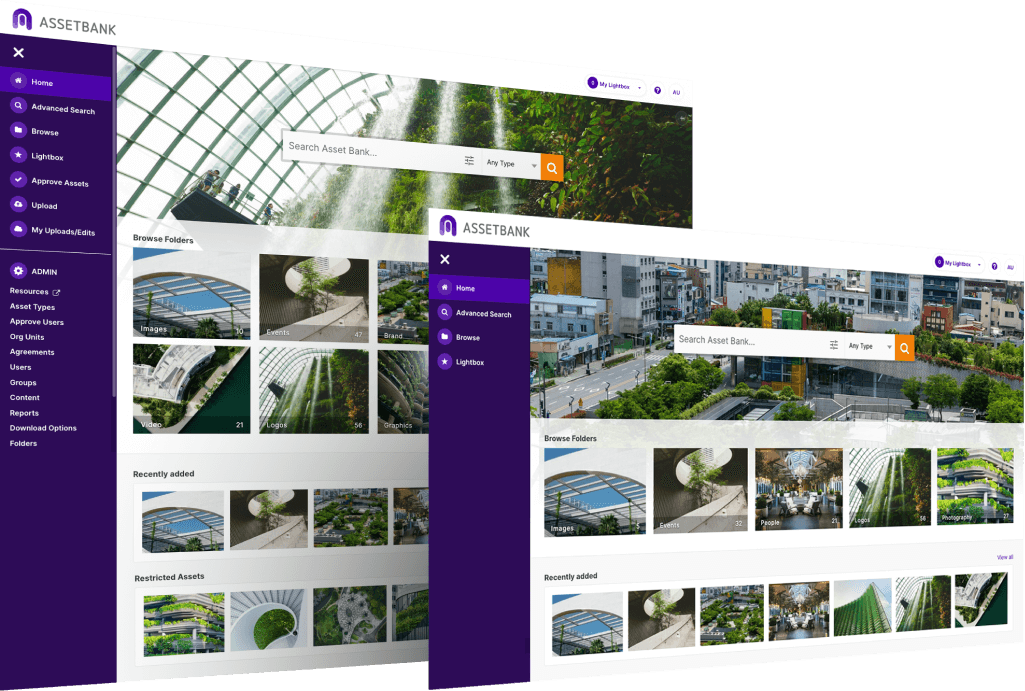
A brand asset management system is the software that helps you manage everything that represents your brand. It's the central hub, where every digital asset is easy to find, all assets are properly tagged, and used in the right context – no more duplicates, no outdated files, and no brand inconsistencies.
  It’s a must-have for any team managing content across departments, markets, or agencies.

Whether you're a designer, a marketer, or a salesperson, BAM ensures that everyone – from in-house teams to freelancers – is working from the same, approved version of every piece of content.

brand assets
brand assets2

Examples of brand assets

Brand assets include any content that represents your brand visually or verbally. This can include:

  • Logos (and variations by colour, size, format)
  • Brand guidelines and tone of voice documents
  • Campaign visuals and templates
  • Product and lifestyle imagery
  • Icons, fonts, and graphic elements
  • Social media content and ad creatives
  • Presentation decks and brochures
  • Messaging templates or boilerplate copy

All these assets shape your brand – so they need to be easy to find and ready-to-use. Without a central hub, these pieces of content can quickly get buried in old folders, or duplicated again and again… leading to confusion, delays, and off‑brand mishaps.

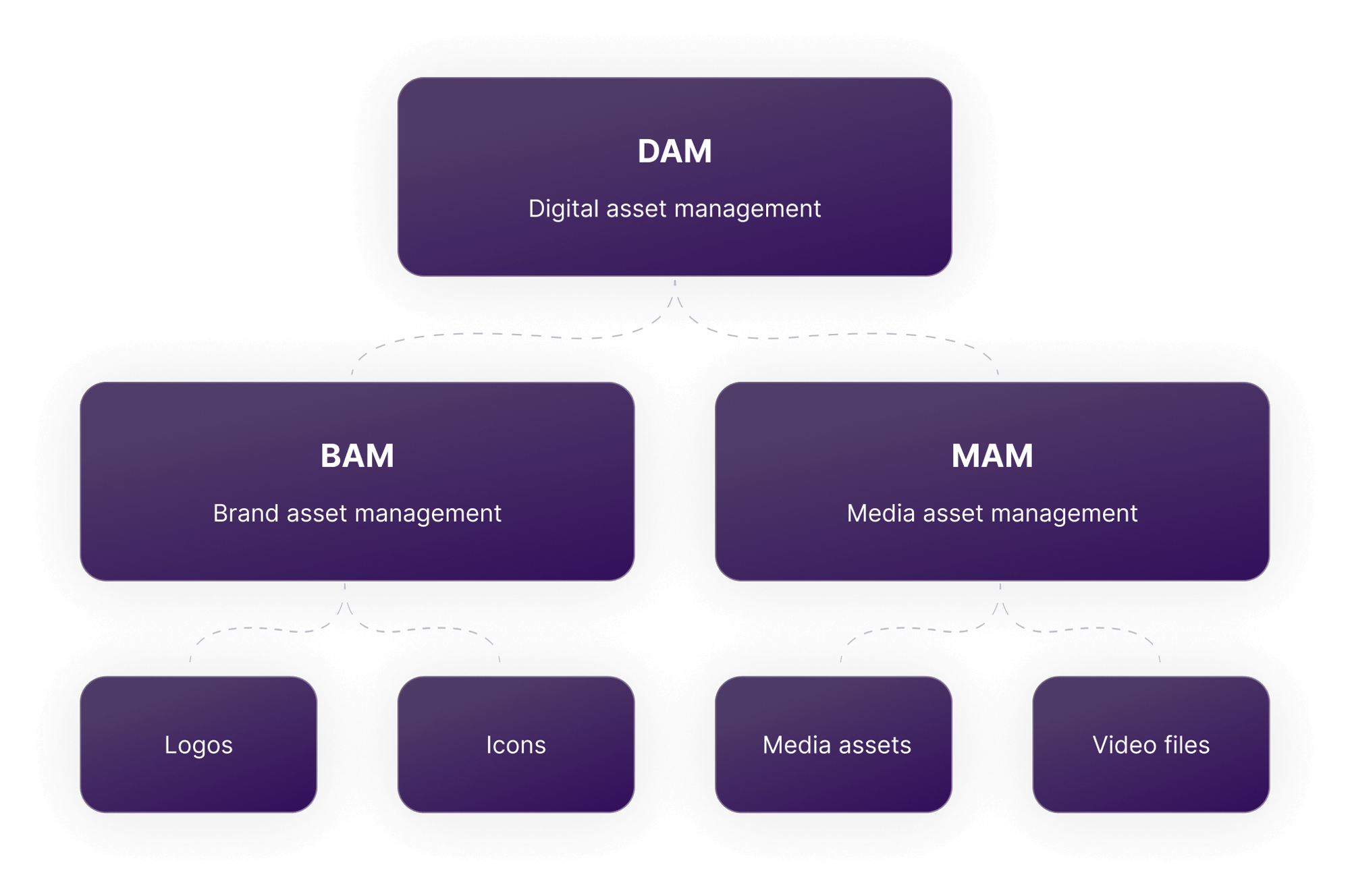
BAM vs DAM: What's the difference?

BAM

Brand asset management zeroes in on the content that defines your brand – the logos, images, templates, and tone-of-voice guides that shape how people see (and remember) you.

A strong brand asset system keeps your brand identity front and centre across every channel and campaign, protects against off-brand mishaps, and helps you stay compliant. It gives teams structure, clarity, and control.

DAM

BAM is a specialised part of the wider DAM world. Digital asset management looks after all your digital files. When assets are stored in DAM software, the system’s intuitive search functionality and meta-tagging makes them easier than ever for anyone to find.

DAM software can also be BAM software. Think of digital asset management as the practice of managing all your digital files. BAM refers only to the specific brand elements.

Map

MAM

Media asset management (MAM) refers to media file management only, i.e., video files, audio, podcasts, music files, etc. We won't go into that too much here, but we've got a whole blog on DAM vs MAM that you can explore. Generally, MAMs are more specific, and more suited to clients who are specifically managing music files and video/audio recordings.

The benefits of brand asset management

It’s not just about tidying up your digital files – it’s about unlocking strategic advantages across your entire organisation. From time savings and cost efficiency to better brand control and security, BAM delivers real, measurable value. Here’s how:

scroll-img3 scroll-img3 scroll-img3
icon1
Faster time-to-market and cost savings

With a platform like Asset Bank, everything is logically organised, intelligently tagged, and easily searchable. That alone can save:

  • 20–30% of time per user every week
  • £1,000s in unnecessary duplication – for example, organisations often discover they’ve purchased the same stock images multiple times. 

See the hidden costs of poor brand asset management

Frame
Stronger brand consistency and compliance

When brand assets are scattered across different systems (or worse, hidden in email threads), brand consistency suffers.
Brand asset management fixes this by ensuring that only approved, up-to-date assets are available to users. With version control and access permissions, teams can confidently use assets knowing they’re on-brand and compliant.
This is especially critical for:

  • Maintaining a cohesive brand identity across channels and regions
  • Regulatory compliance, especially for industries like healthcare, finance or non-profits
  • Ensuring campaign assets are used correctly and retired on time
Frame2
Improved productivity and collaboration across teams

Cross-departmental teams, or teams in different time zones, can work together without bottlenecks or delays thanks to:

  • Real-time asset previews and approvals
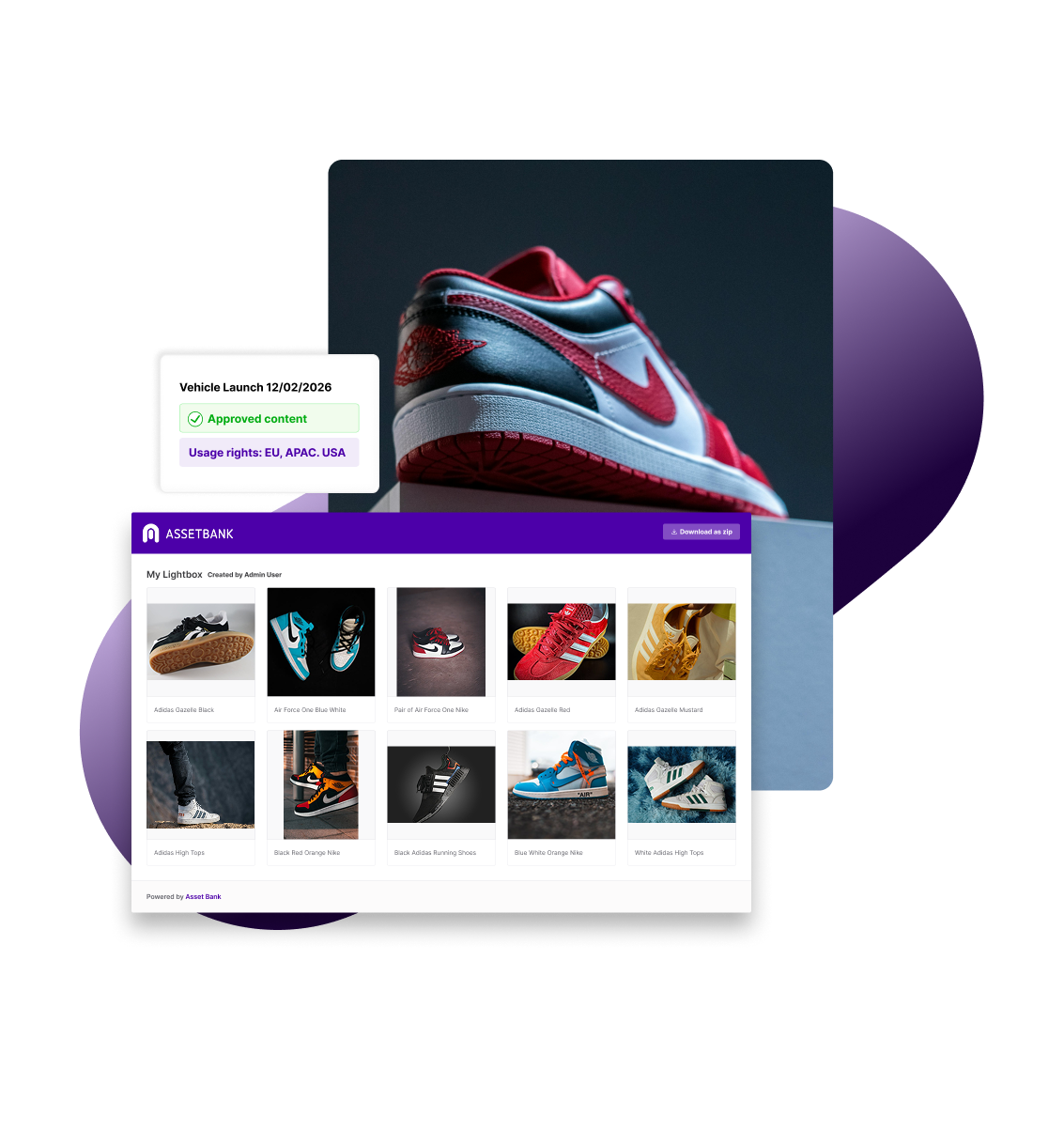
  • Lightboxes and shared collections for projects
  • Integrated creative workflows with platforms like Canva, Adobe and SharePoint

This means fewer back-and-forths, fewer duplicated tasks, and more time spent on high-value creative work.

icon2
Security and rights management for protected brand assets

Brand content is valuable – and often sensitive. BAM platforms like Asset Bank include robust security features designed to protect your assets at every level. Key features include:

  • Encryption and SSO (Single Sign–On) for secure user authentication
  • Role–based permissions to control access across departments and partners
  • Usage rights tracking to ensure assets are used only within licensed terms
  • Watermarking and expiry settings to protect and manage file lifecycles
icon6
Data-driven insights on asset usage

Beyond storage and access, modern brand asset management platforms offer valuable analytics. These insights help you understand:

  • Which assets are being used the most (and by whom)
  • How often assets are downloaded or shared
  • Where duplicates exist across your content library

With this data, teams can make smarter decisions about what to create, what to retire, and how to improve future campaigns. 

Who uses brand asset management – and how?

Internal and external teams

check-1
Marketing teams

To roll out campaigns at speed, and stay consistent across channels.

check-1
Designers

To find the latest templates, avoid rework, and streamline feedback.

check-1
Sales and sales enablement teams

To quickly access the right visuals for pitch decks.

check-1
PR teams

For the secure sharing portals to serve assets, product or event imagery to press partners.

check-1
Legal and compliance teams

To manage rights, track usage, and stay audit-ready.

check-1
Agencies and partners

To get self-serve access to brand-approved assets.

check-1
Freelance photographers and designers

To upload their content for approval before it's set live.

How is the BAM software used

check-1
Portals

To allow photographers or designers to submit assets directly into the system.

check-1
Guest access

To let collaborators view or download only the assets they need.

check-1
Lightboxes

To enable users to group and share collections of assets for specific projects.

This ensures seamless collaboration while keeping full control over what’s shared, how it’s accessed, and who can see it.
With clear permissions, custom user roles and brand portals, good brand asset management helps these teams collaborate efficiently – internally and externally – without compromising brand standards.

5 best practice tips to use BAM

Read our case study on how amnesty international uses asset bank

Frequently asked questions

What is brand asset management (BAM)?

BAM is the organised system for managing, storing, and sharing brand-specific digital assets – such as logos, fonts, templates, imagery, videos, and guidelines – in a central platform. The aim is to ensure consistency and efficiency in brand usage across all touchpoints.

How does brand asset management (BAM) differ from digital asset management (DAM)?

While DAM covers all types of digital content across an organisation, BAM focuses specifically on brand-related assets. Think of BAM as a curated subset of DAM designed to ensure brand identity remains consistent and up-to-date.

Why is brand asset management important?

Brand Asset Management ensures brand stability by reducing time people across the business spent searching for the right version of a file/logo/image, etc. When you have the right BAM software, you only ever have a single source of truth – eliminating duplicate content creation, or Slack messages asking, 'Is this the right one?', and maintains visual and messaging consistency.
It boosts confidence across the company: Sales teams quickly know where to find what they need to curate their sales decks; Designers spend their time actually designing, rather than reassuring people they're using the right content (or re-sending the same versions over and over again); Brand Managers don't have to worry that regional or satellite teams have gone rogue; PR teams never need fear an embarrassing slip-up that they'll need to do damage control for.
Work in general is altogether smoother, calmer, and faster, freeing up time for creativity and strategy, rather than unnecessary admin!
It’s also crucial for compliance – particularly in regulated industries, such as Not-For-Profits, charities, and the education sector – or anyone dealing with content that refers to under-18s.

Who should use BAM software?

Marketing, creative, brand, sales, legal teams, and external partners (agencies, freelancers) can all benefit from BAM software.
It’s essential in industries with high asset volume or regulatory oversight, such as Not-For-Profits, Education Institutions, Media, Travel, and Retail companies.

What types of content fall under BAM?

Examples include logos, icons, colour palettes, typography, advertising templates, photography, videos, soundtracks, slogans, mascots, packaging files, guidelines, and marketing collateral materials.

What are key features to look for in a BAM system?

Key features to look for in a potential brand asset management system include:

  • Centralised storage with secure access so there's only ever a single source of truth.
  • Intelligent tagging and metadata for precise retrieval and ease of upload – ideally AI will do the bulk of this for you, such as auto-tagging and writing image descriptions for you to simply review.
  • Version control to ensure brand integrity.
  • Permission settings to regulate who can access or edit content. Only certain people should be able to upload content, and you should be able to limit how much certain people can see. Asset Bank uses features like Portals to do this.
  • Search and AI tools for rapid asset discovery
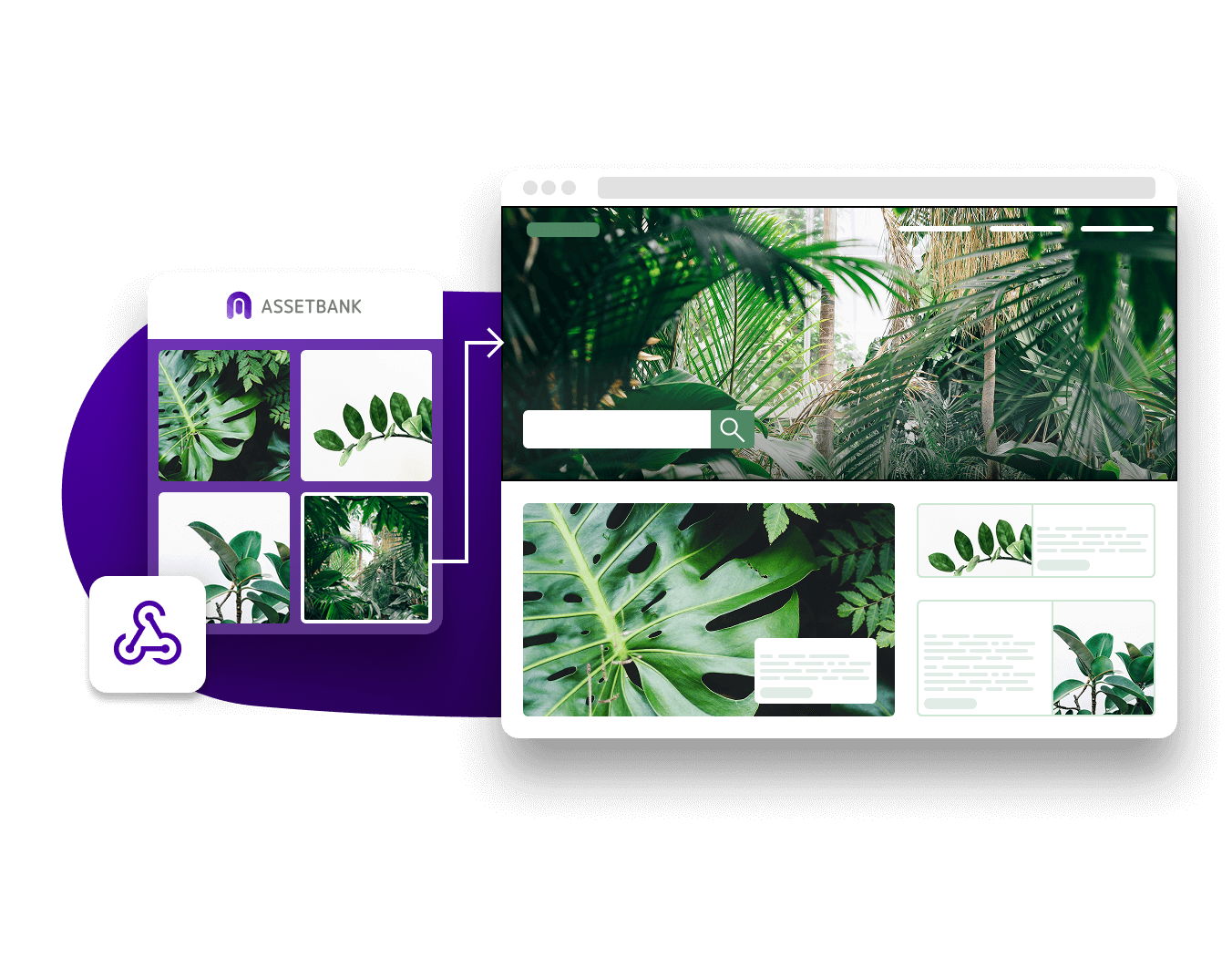
  • Integrations with creative and productivity tools, like CanvaAdobeFigmaSketchGoogle DriveMicrosoft 365SharePointWordPressSitecoreMedia ChannelShutterstockZiflowBrandStencil, and more...
  • Analytics to monitor usage and brand asset management ROI

What are the benefits of implementing BAM software?

  • Saving up to 20–30% of asset management time
  • Reducing spending on duplicate asset creation
  • Ensuring brand consistency
  • Enhancing collaboration across teams and locations
  • Improving asset reuse via smart metadata and AI
  • Providing security, rights management, watermarking
  • Enabling data-driven decision-making through usage analytics

Is BAM suitable for small businesses?

Yes. BAM scales from small teams to global corporations. SMBs benefit from faster asset retrieval, stronger brand control, and fewer errors – without requiring complex systems.

How long does it take to implement DAM for BAM?

A fully deployed DAM system can be live in a few weeks to a few months, depending on scale and your specific requirements. Key steps include stakeholder alignment, taxonomy setup, integrations, and user training. Ongoing governance ensures long-term success. Asset Bank offers full onboarding support to get your team up and running as quickly as possible.

What metrics should I track to measure BAM ROI?

  • Reduction in asset search time
  • Frequency of asset reuse
  • Incidents of brand or compliance errors
  • Workflow speed (e.g., time-to-publish campaigns)
  • User adoption and engagement levels
  • Cost savings from avoiding duplicate content

How do I choose the right BAM platform?

Look for platforms that offer:

  • User–friendly interface
  • Scalable performance
  • Advanced versioning and security
  • Rich analytics
  • Seamless integrations

Ready to see the difference for yourself?

cta-img