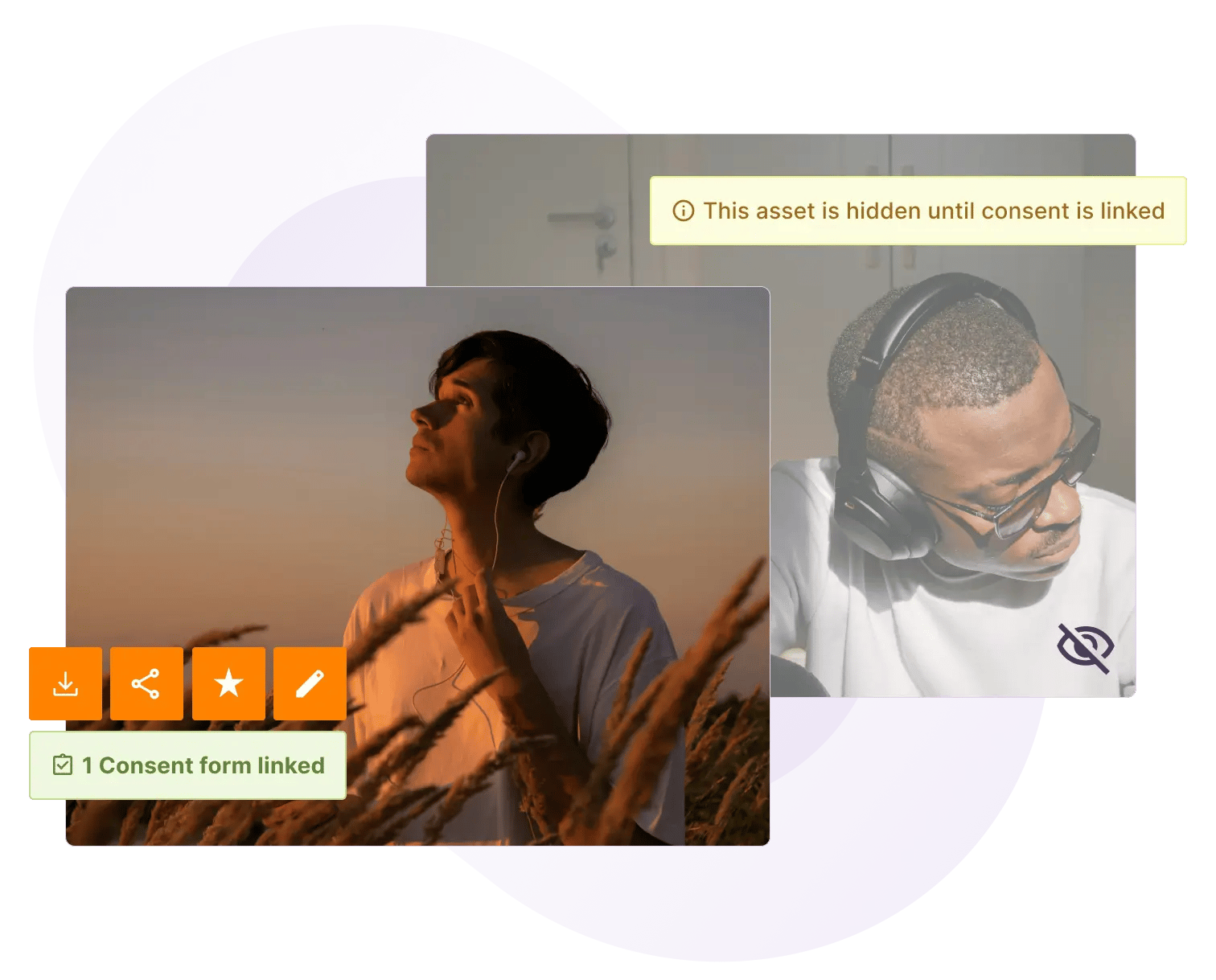
Consent, content, and compliance:
Do you know which images you have permission to use? When consent expires? Or who has access to your most sensitive content?
Managing GDPR compliance across thousands of digital assets doesn't need to be complicated.
Our free GDPR 101 playbook helps marketing, brand and content teams understand their responsibilities, uncover hidden compliance risks and take control of their digital assets.
From employee photography and customer testimonials to event videos and user-generated content, personal data is everywhere in your digital asset library.
But when consent forms, usage rights and expiry dates are managed across disconnected systems, knowing which assets are safe to use becomes increasingly difficult.
And the consequences of getting it wrong go beyond regulatory fines. Your brand reputation, customer trust and team productivity are all at stake.

Our practical guide to GDPR for digital asset management explores:
GDPR compliance shouldn't mean more spreadsheets, more admin or slower campaigns.
With the right digital asset management (DAM) system, your teams can manage consent, stay on top of usage rights and control access to content – without unnecessary manual processes.
Spend less time questioning whether you can use an asset and more time creating impactful campaigns.
Use assets confidently. Control access. Protect rights.
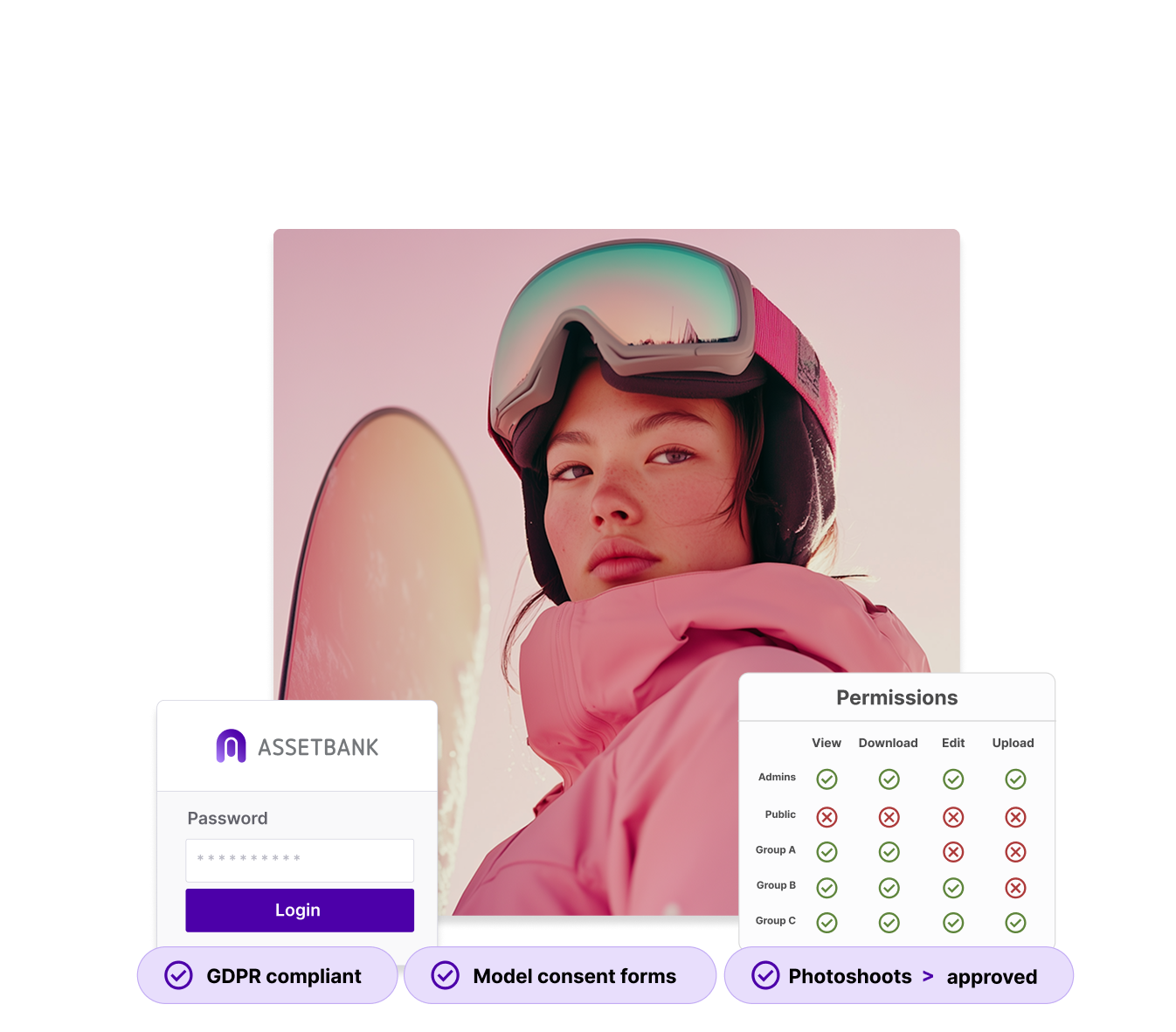
Download your free GDPR 101 playbook and discover how to make compliance part of your everyday marketing workflows.

GDPR in digital asset management refers to the responsibilities organisations have when collecting, storing, sharing and using digital assets containing personal data. A DAM system can support GDPR compliance through consent management, access permissions, retention controls and audit trails.
Yes. Photographs and videos containing identifiable individuals can constitute personal data under GDPR. Organisations need an appropriate lawful basis for processing this content and must manage it in accordance with applicable data protection requirements.
A digital asset management system can support GDPR compliance by centralising consent records, managing asset expiry dates, restricting access to sensitive content and maintaining audit trails. Automated workflows can also help reduce the risk of outdated or unauthorised content being used.
Look for built-in consent management, granular access permissions, configurable expiry actions, asset-level usage restrictions and comprehensive audit trails. These capabilities help marketing teams manage compliance more consistently.
No. A DAM system provides tools to support GDPR compliance, but organisations remain responsible for establishing appropriate policies, lawful bases and data protection processes.